Florida Roof Types: Which Material Is Right for Your Tampa Bay Home?
Compare asphalt shingles, tile, metal, and flat roofing for Florida's climate. Honest pros, cons, and cost guidance from a licensed Tampa Bay roofing contractor.
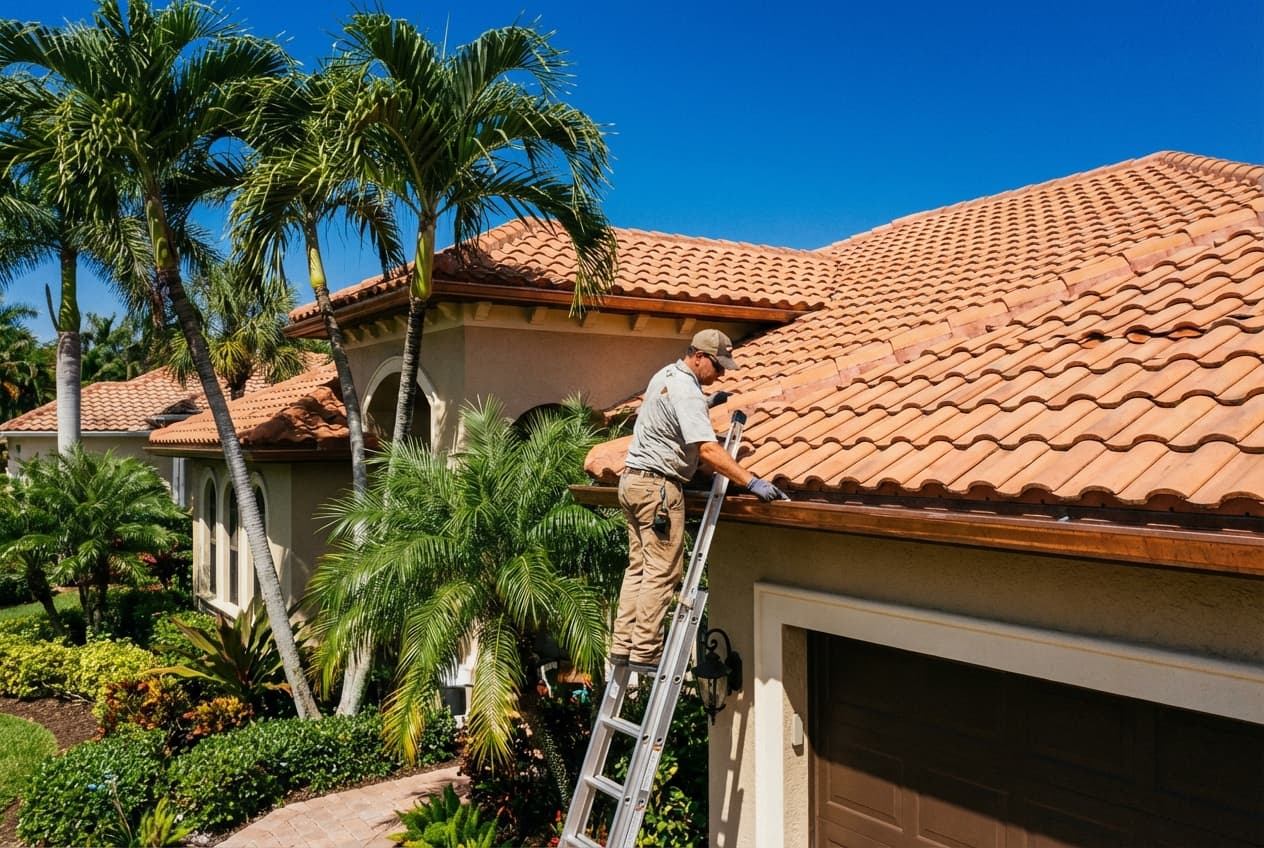
Florida is one of the most demanding environments for roofing materials in the United States. The combination of intense UV radiation, high humidity, seasonal hurricane-force winds, and dramatic temperature fluctuations eliminates materials that perform well in milder climates. After replacing hundreds of roofs across Hillsborough County, here's what we know about how each material type actually performs in Tampa Bay.
What Makes Florida Different for Roofing
Before comparing materials, it helps to understand the specific stressors Tampa Bay roofs face that don't apply the same way in the rest of the country.
UV exposure: Florida receives more annual sunlight hours than most U.S. states. UV radiation breaks down asphalt compounds roughly 40% faster than in northern climates, accelerating granule loss and brittleness.
Humidity and moisture cycling: Tampa's average relative humidity runs above 70% year-round. Materials that absorb and release moisture repeatedly — wood, some underlayments — deteriorate faster. Mold and algae growth on roof surfaces is routine, not exceptional.
Wind loads: Hillsborough County requires roofing products to meet Florida Product Approval standards. Since Hurricane Andrew in 1992, Florida has the strictest residential wind load requirements in the country. Materials need to be installed to specific fastening patterns to meet code.
Thermal expansion: Tampa's temperature range — from occasional near-freezing nights in winter to 95°F+ summer days — causes roofing materials to expand and contract repeatedly. This movement stresses fasteners and sealants over time.
Asphalt Shingles
What they are: Fiberglass mat coated with asphalt and mineral granules. The most common residential roofing material in the U.S.
Lifespan in Florida: 15 to 25 years, compared to 25 to 30 years in cooler northern climates. The UV acceleration and humidity cycling reduce effective service life substantially.
Florida code requirements: Must meet FL Product Approval for wind uplift. Most Tampa Bay installations use 6-nail fastening patterns rather than the 4-nail standard used elsewhere, which improves wind resistance.
Pros:
- Lowest installed cost of any common roofing material ($8,000 to $14,000 for a typical Tampa home)
- Widely available in insurance-compatible grades
- Easy to repair — individual shingles can be replaced without disturbing the full roof
- Many color and style options
Cons:
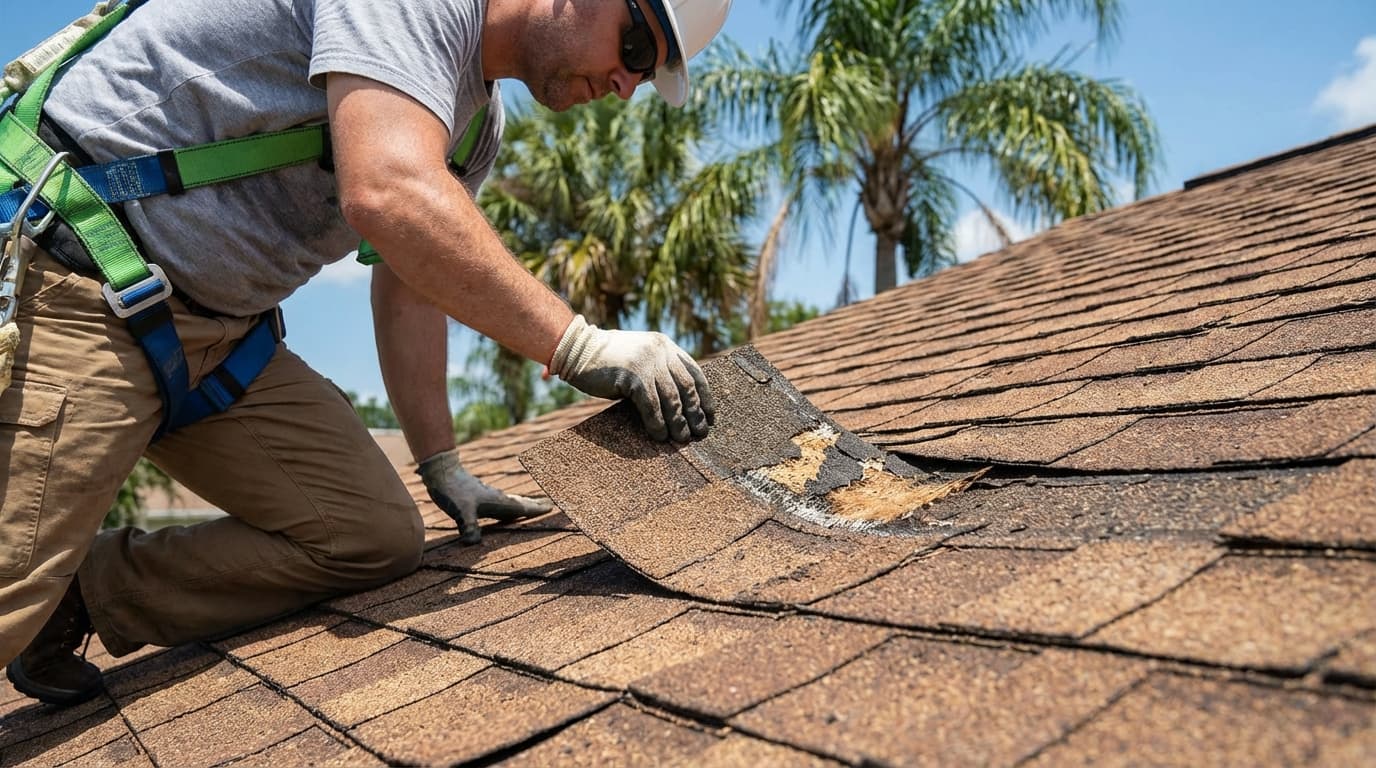
- Shorter lifespan in Florida than the 30-year labels suggest
- Granule loss from UV exposure accelerates over time
- Algae streaking common in Tampa's humidity — requires periodic cleaning or algae-resistant shingles
- Less prestigious appearance than tile in neighborhoods where tile is common
Best for: Homeowners managing budget, properties with complex rooflines that increase tile installation cost, and investors managing rental properties.
Concrete and Clay Tile
What it is: Molded tile made from either concrete or natural clay. Extremely common in Florida, particularly in newer developments built since the 1990s.
Lifespan in Florida: 40 to 50+ years for the tile itself. Underlayment under the tile typically needs replacement every 20 to 30 years, which requires removing and re-setting the tile.
Florida code requirements: Tile must meet strict wind uplift approval. Installation method — mortar-set, foam-set, or mechanically fastened — affects wind performance and cost.
Pros:
- Long service life significantly reduces lifetime cost per year
- Excellent thermal performance — the air gap under tile reduces heat transfer into the attic
- High resistance to UV degradation — tile color is mineral-based, not surface-applied
- Insurance pricing advantage in some carriers due to fire resistance
- Standard appearance in many Tampa Bay neighborhoods; maintains or increases property value
Cons:
- Higher installed cost ($18,000 to $35,000+ for a typical home depending on tile profile)
- Heavy — older homes may require structural assessment before adding tile
- Individual broken tiles are easy to replace, but walking on the roof requires care
- Underlayment replacement at year 20-25 adds cost not present with metal or shingles
Best for: Homeowners planning to stay long-term, neighborhoods where tile is standard, and anyone prioritizing lifetime value over upfront cost.
Metal Roofing
What it is: Steel, aluminum, or copper panels or shingles. Standing seam is the most common commercial and high-end residential application; metal shingles mimic other materials at lower cost.
Lifespan in Florida: 40 to 70 years depending on material and coating. Aluminum and Galvalume steel resist Florida's salt air and humidity well. Bare galvanized steel is not appropriate for coastal areas.
Florida code requirements: Must meet FL Product Approval for wind uplift. Standing seam systems with concealed fasteners generally outperform exposed fastener systems in wind uplift testing.
Pros:
- Longest service life of any common residential roofing material
- Excellent wind resistance — standing seam systems regularly survive Category 4+ winds intact
- High solar reflectance — rated "cool roof" coatings reduce cooling costs, significant in Tampa's 8-month hot season
- No granule loss, no organic material for algae or mold to colonize
- Increasing insurance carrier acceptance and in some cases favorable rating
Cons:
- Higher installed cost than asphalt shingles ($15,000 to $30,000+ for standing seam)
- Can be noisy during heavy rain if attic insulation is minimal
- Expansion noise ("oil canning") in large flat panels — normal but disconcerting to some homeowners
- Not standard in many Hillsborough County neighborhoods — HOA approval may be required
Best for: Homeowners who want the lowest maintenance over a 30+ year horizon, properties in wind-exposed locations, and anyone with a long planning horizon on the home.
Flat and Low-Slope Roofing Systems
What it is: Any roof with less than 2:12 pitch requires a flat roofing system rather than shingles or tile. Common on additions, sunrooms, carports, and some contemporary home designs.
Florida-specific systems:
- TPO (Thermoplastic Polyolefin): Single-ply white membrane. Good UV reflectance, heat-welded seams, FL Product Approval available. Common on commercial and residential flat roofs. Lifespan 15 to 25 years.
- Modified Bitumen: Multi-layer asphalt-based system. Torch-applied or self-adhering cap sheet. More impact resistant than TPO, longer history in Florida. Lifespan 20 to 30 years.
- Spray Polyurethane Foam (SPF): Expanding foam base coated with elastomeric sealant. Seamless installation eliminates leak points at transitions. Excellent insulation value. Requires recoating every 10 to 15 years.
Pros:
- Only appropriate option for low-slope areas — shingles and tile cannot be used below 2:12 pitch
- TPO's white surface significantly reduces heat gain on living spaces below
- Modified bitumen is extremely durable and repairable
Cons:
- Standing water accelerates deterioration — drainage design is critical
- More frequent inspection needed than pitched roofs — membrane penetrations and seams are common failure points
- Coating maintenance for SPF systems adds long-term cost
Best for: Any low-slope section of a home. Often combined with pitched roofing on the same structure.
Florida Building Code Considerations for Any Roof Type
Hillsborough County requires permits for most roof replacement work, and Florida's 25% rule means that if more than 25% of your existing roof surface is replaced, the entire roof must be brought to current code. This affects:
- Underlayment: Current code requires secondary water barrier (peel-and-stick) on new and re-roofed structures
- Drip edge: Required at eaves and rakes on current code installations
- Nailing patterns: Higher fastener density than older code requirements
These code upgrades add to replacement cost but substantially improve wind performance. If you're getting estimates and one comes in dramatically lower than others, ask specifically what code upgrades are included — that's often where corners get cut.
Making the Decision
The right material depends on four factors:
- How long you plan to own the home: Tile and metal pencil out at lower lifetime cost over 30+ years despite higher upfront cost.
- Your neighborhood: HOA rules and comparable homes affect resale value and insurability.
- Insurance: Ask your insurer how each material type affects your premium before deciding — the answer varies significantly by carrier.
- Current structure: Tile weight matters on older homes. A structural assessment may be needed.
We're happy to walk through the math for your specific situation. A free inspection also tells us the condition of your existing deck, which affects what can be installed without remediation costs.
Call (813) 324-6813 for a no-obligation inspection and material consultation — we'll give you an honest assessment, not a sales pitch.