Free Inspections · Licensed & Insured
For Tampa homeowners, property managers, and real estate investors planning a gutter installation, this page breaks down what labor, materials, and code compliance actually cost in Hillsborough County.
Installing gutters in Tampa, Florida typically costs $6 to $9 per linear foot for seamless aluminum installed, combining material and labor. A full installation on a single-story home with 150 to 200 linear feet of guttering commonly totals $900 to $1,800, while two-story homes regularly run $1,500 to $2,500 or more depending on roofline complexity and whether fascia replacement is needed.
Labor alone typically accounts for $1 to $3 per linear foot of the total installed price, with the balance going to materials, downspouts, hangers, sealant, and any fascia or soffit work the project requires. Tampa contractors price gutter installation higher than the national average for comparable homes because Florida's humidity and hurricane-season rainfall intensity demand higher-gauge materials, proper pitch calibration, and more aggressive downspout placement than most U.S. markets require.
The installed price for seamless aluminum gutters in Tampa sits between $6 and $9 per linear foot when labor and materials are combined. Labor makes up roughly 25 to 35 percent of the total in most quotes, typically $1 to $3 per linear foot, with the variation driven by story count, roofline shape, and whether any tearout of existing gutters is included in the scope. Material costs for standard 0.027-gauge aluminum seamless K-style gutters commonly run $2 to $5 per linear foot before installation, with downspouts adding $5 to $15 per outlet depending on height and material. Sealant, hangers, end caps, and mitered corners add another $0.50 to $1.50 per linear foot in incidentals.
Sectional aluminum gutters installed without a roll-forming machine cost less per linear foot at roughly $4 to $7 all-in, but the savings narrow quickly when you factor in the additional labor required to seal every joint properly and the higher maintenance burden those joints create over time in Tampa's wet climate. Most contractors working in Hillsborough County default to seamless systems for new installations and replacements because the labor cost difference over the life of the system is outweighed by the reduction in leak-related callbacks and emergency repair calls after storm events.
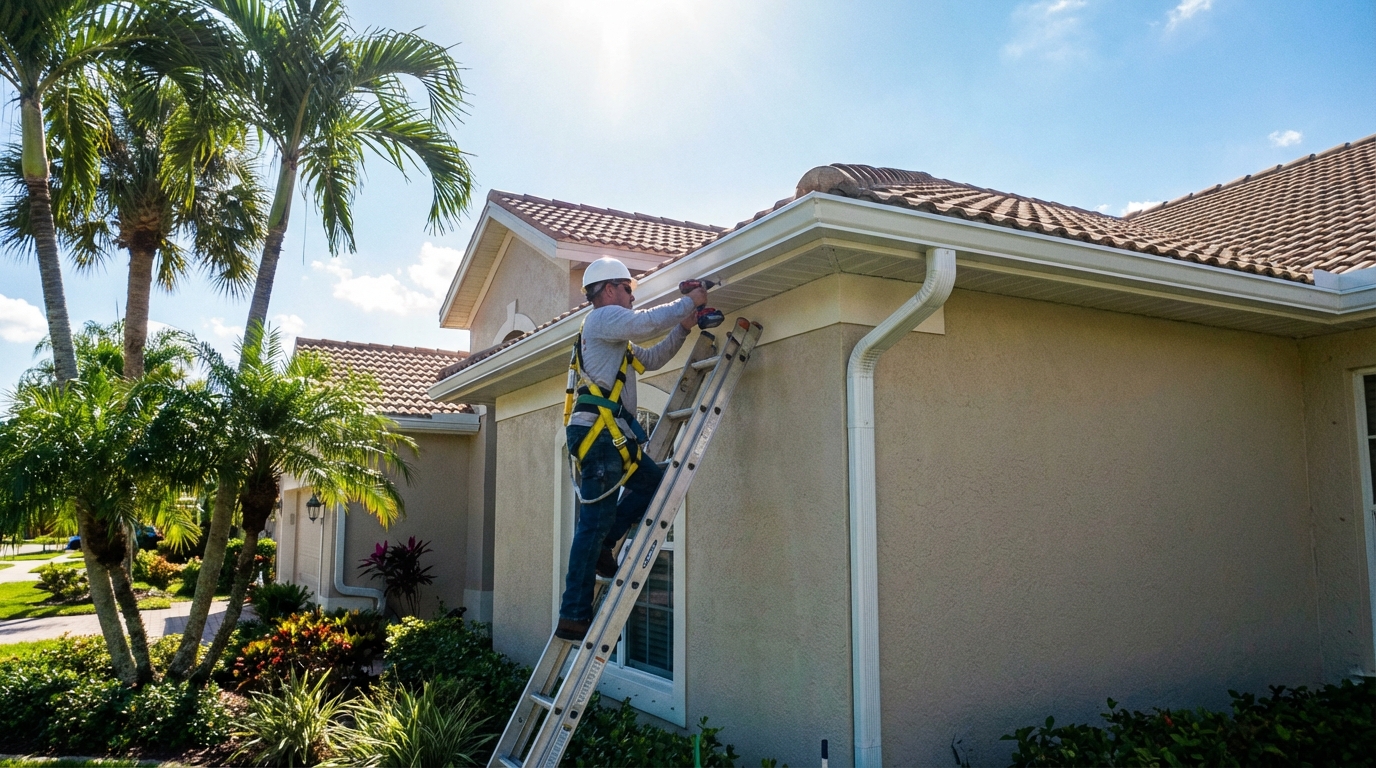
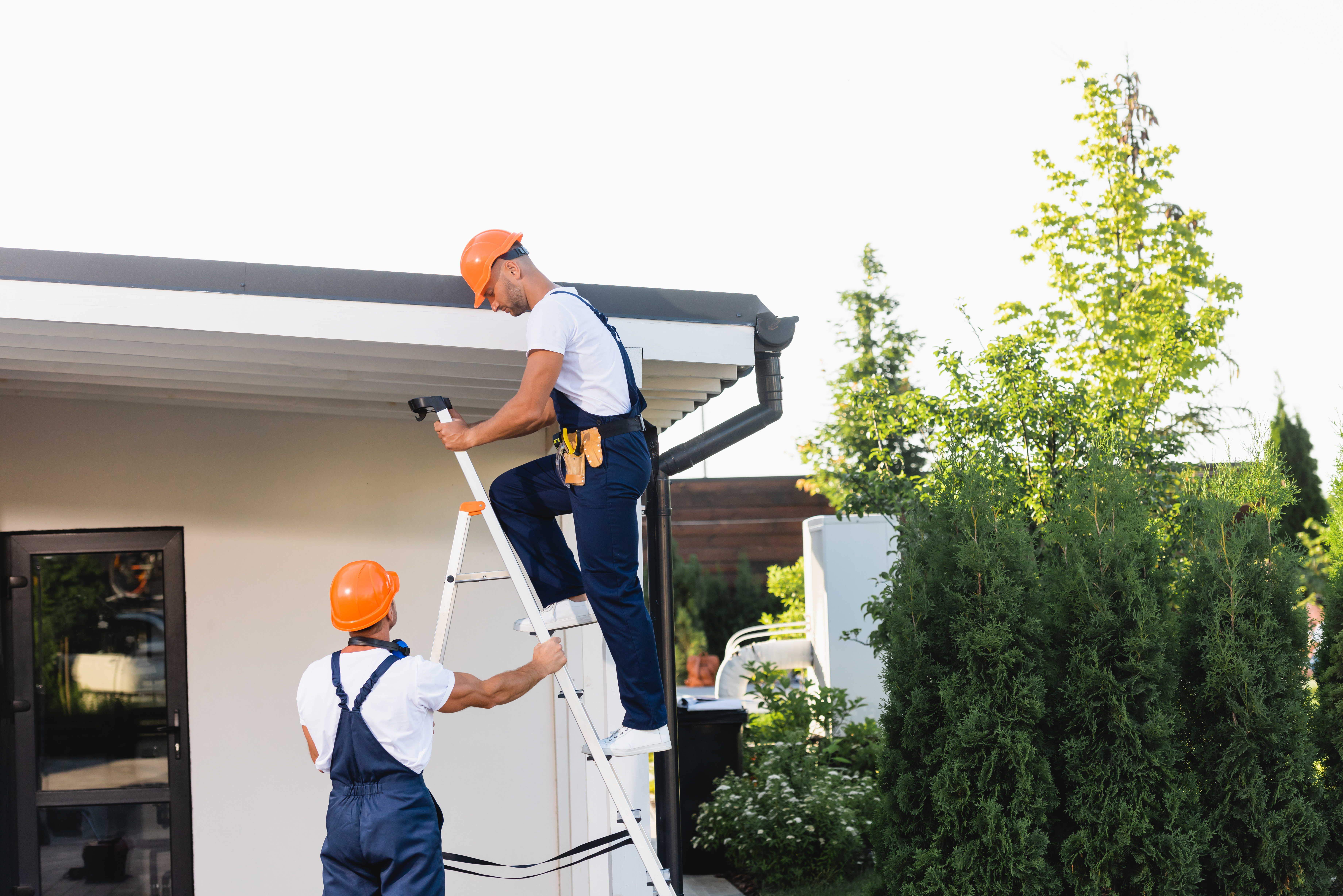
Story count is the most significant labor variable beyond linear footage. Single-story homes allow gutter crews to work from standard extension ladders with minimal setup time, keeping labor in the $1 to $1.50 per linear foot range on straightforward jobs. Two-story homes require taller ladders, additional safety equipment, and more time per foot of run, routinely adding $100 to $400 in labor cost across a full home installation. Properties with steep roof pitches or narrow soffit clearances add further complexity because crews must take more time positioning equipment safely and working in tighter quarters.
Tearout of existing gutters adds a flat labor cost that Tampa contractors typically charge as either a per-linear-foot line item at $0.50 to $1.00 or a flat fee of $75 to $200 for a standard home. Fascia replacement, when the boards behind the gutters are rotted or damaged, is a separate trade item that commonly runs $8 to $20 per linear foot depending on fascia width and whether the soffit is undamaged. Any time fascia replacement is involved, the City of Tampa Construction Services or Hillsborough County Building Services will likely require the work to be permitted, which adds permit fees and inspection time but also means the work is formally documented for future insurance purposes.
Standard gutter installation, including the removal of existing gutters and the hanging of new seamless aluminum runs, typically does not require a building permit in Tampa when no structural elements are disturbed. The line that triggers permit requirements under the Florida Building Code is any work that touches the fascia board in a repair or replacement capacity, modifies the roof deck, or alters the soffit structure. Hillsborough County Building Services processes permits for unincorporated Hillsborough County properties, while the City of Tampa Construction Services handles properties within the city limits, including most of South Tampa, Seminole Heights, and adjacent neighborhoods.
Permit fees for residential gutter and fascia work in Hillsborough County commonly run $75 to $200 based on the declared value of the work. The permitting process adds one to two weeks to the project timeline in most cases, though some jurisdictions offer same-week expedited review for straightforward residential scopes. The permit creates a public record of the work, which matters for homeowners who may need to document compliant installations when filing storm damage claims or selling the property. Ask any Tampa gutter contractor whether their proposed scope will be permitted, and if fascia work is involved, request written confirmation that permits will be pulled before work begins.
The Florida Building Code establishes minimum performance requirements for drainage systems on residential structures, and several provisions directly affect how gutters must be installed in Tampa. The code requires gutters to maintain a minimum slope of one-quarter inch per 10 linear feet toward the downspout outlet, ensuring that water moves continuously rather than pooling. In practice, Tampa contractors working with high-volume K-style seamless systems often set slope at one-half inch per 10 feet to handle the rainfall intensities that Hillsborough County sees during afternoon thunderstorms and tropical systems, which can deliver 3 to 8 inches per hour in peak events.
Hanger spacing is another code-governed element. The Florida Building Code requires hangers to support the gutter at sufficient intervals to prevent sagging under water load, with 24 inches on center commonly cited as the maximum spacing for standard residential applications. Tampa contractors familiar with local wind load requirements often space hangers at 18-inch intervals on sections exposed to prevailing storm winds, which provides additional resistance to the uplift forces that can pull gutter sections away from the fascia during tropical weather. FEMA guidance for flood-zone properties adds a practical layer: downspouts should terminate with extensions that carry water at least four to six feet from the foundation, a requirement that many older Tampa homes do not currently meet and that a new installation is an ideal opportunity to address.
Getting at least two written bids from DBPR-licensed Tampa contractors is the most effective way to understand the realistic cost for a specific property. The key is ensuring each bid covers the same scope so comparison is meaningful rather than misleading. Bids that quote a price per linear foot without specifying material gauge, profile type, hanger spacing, downspout count and size, and tearout scope are difficult to compare accurately because each of those variables can move the final price by hundreds of dollars on a standard home. A bid that shows $5 per linear foot for "aluminum gutters" without specifying seamless versus sectional, gauge, or downspout count is structurally incomplete.
Property managers and real estate investors overseeing multiple Tampa properties should also ask about volume pricing and standing service agreements, as some Tampa contractors offer preferred pricing on inspection and maintenance packages for portfolios of three or more properties. Verify contractor license status through the Florida DBPR portal before signing any contract, and request current copies of both general liability and workers compensation insurance certificates. Contractors who cannot produce both documents promptly should not be considered for Tampa gutter work regardless of price, because storm-related concurrent claims are common in Hillsborough County and having an uninsured contractor on the property creates direct liability exposure for the owner.
| # | Item | What to confirm | Time to verify | Check where |
|---|---|---|---|---|
| 1 | Seamless fabrication | Contractor brings roll-former on-site | Under 1 min | Ask contractor directly |
| 2 | Aluminum gauge | 0.027-inch minimum for Tampa wind loads | Under 1 min | Written bid |
| 3 | Slope setting | 0.5 in per 10 ft confirmed at pre-job walkthrough | 5 min | Pre-job site visit |
| 4 | Hanger spacing | 18 to 24 inches on center per FBC | On site | Post-install check |
| 5 | Downspout count | One per 20 to 30 ft of gutter run minimum | 5 min | Written bid |
| 6 | Extension length | 4 ft minimum from foundation per FEMA guidance | On site | Post-install check |
| 7 | Tearout included | Old gutter removal scope listed explicitly | Under 1 min | Written bid |
| 8 | Fascia inspection | Contractor checks fascia before hanging | 5 min | Pre-job walkthrough |
| 9 | Permit confirmation | Written statement on permit status | 5 min | Written bid |
| 10 | DBPR license | Contractor license verified independently | 5 min | Florida DBPR portal |
| 11 | Liability insurance | Current GL certificate provided | 5 min | Request from contractor |
| 12 | Warranty terms | Labor and material warranty stated in writing | Under 1 min | Written bid |
South Tampa installations frequently involve older wood fascia boards that require replacement before new gutters can be properly anchored. This brings the average installation cost per linear foot in this neighborhood above the county standard, as fascia work adds $8 to $20 per linear foot on affected sections. Homeowners in historic district areas should also confirm with the City of Tampa Construction Services whether exterior material changes require design review.
Labor for gutter installation in Tampa typically runs $1 to $3 per linear foot on top of material costs, with the total installed price for seamless aluminum commonly landing at $6 to $9 per linear foot. Two-story homes and complex rooflines carry a labor surcharge of $100 to $400 due to additional staging time and ladder work.
Most single-story Tampa homes with 150 to 200 linear feet of guttering can be completed in a single day. Two-story homes or properties requiring fascia replacement commonly take one to two days. Permitting through Hillsborough County Building Services or the City of Tampa Construction Services adds one to two weeks if structural work triggers the permit threshold.
DIY gutter installation is legal for homeowners on their own property in Florida, but seamless gutters require a roll-forming machine that is not practical to rent. Sectional gutters can be self-installed, though improper pitch and hanger spacing are the most common causes of gutter failure in Tampa's high-rainfall environment. Any fascia or soffit work connected to the installation may require a permit from Hillsborough County Building Services regardless of who performs the work.
The Florida Building Code requires gutters to slope at least one-quarter inch per 10 linear feet toward the downspout outlet. In practice, Tampa contractors often set slope at one-half inch per 10 feet for K-style systems to move water more aggressively given the intensity of local rainfall. Insufficient pitch is one of the leading causes of standing water and overflow damage in Hillsborough County homes.
A commonly applied rule of thumb is one downspout per 20 to 30 linear feet of gutter run, though Tampa's rainfall intensity means erring toward more frequent outlets. FEMA guidance for flood-zone properties recommends downspout extensions that carry water at least four feet away from the foundation. Homes on FEMA flood maps in Hillsborough County should treat downspout count and extension length as a baseline requirement, not an optional upgrade.
Florida Building Code does not universally require gutters on residential homes, but it does require that roof drainage be directed away from the foundation in a way that prevents water intrusion. In practice, most Tampa homes benefit from gutters given the local rainfall intensity. Any new gutter installation that connects to or modifies roof structure requires coordination with City of Tampa Construction Services or Hillsborough County Building Services depending on the property location.
Gutter installation in Florida is typically performed by licensed roofing contractors. Verify any contractor's license through the Florida DBPR portal before signing a contract. Ask specifically for a copy of their general liability and workers compensation insurance certificates. Contractors who operate without both are leaving homeowners exposed to property damage and injury liability, which matters particularly in Tampa where storm events can create concurrent insurance claims.
Walk the roofline and count the total linear feet that need gutters. Measure each run separately and note how many stories each section is, since story count directly affects labor cost on your installation quote.
Press a screwdriver firmly against fascia boards at several points along the roofline. Any soft or spongy response means the fascia needs replacement, and that scope must be included in every bid you collect so quotes are genuinely comparable.
Look up your address on the Hillsborough County Building Services website or call the City of Tampa Construction Services line to confirm which jurisdiction covers your property and whether your planned scope requires a permit before work starts.
Pull up the Florida DBPR license lookup tool and verify the license status of any contractor you are considering. Request both a general liability and workers compensation certificate from each bidder before agreeing to a site visit or signing a contract.
Gutter installation in Tampa costs $6 to $9 per linear foot for seamless aluminum all-in, with the final number shaped most by story count, fascia condition, and roofline complexity. The fastest step available right now is walking the roofline perimeter, noting total linear feet and fascia condition, and using that information to get written itemized bids from two or more DBPR-licensed Tampa contractors. That comparison, more than any price guide, will tell you exactly what installation costs for your specific property.
Get an inspection-first estimate from a licensed Tampa contractor who knows Hillsborough County permitting and Florida Building Code requirements.
(813) 324-6813