
Free Inspections · Licensed & Insured
Homeowners in Tampa often hear “the 25% rule” after storm damage or during reroof planning. The short version is simple, but the current code language has an exception that matters, so the smartest explanation is plain English, not shorthand.
The 25 rule for roof replacement in Tampa, FL refers to Florida's rule that says more than 25% of a roof area or roof section generally cannot be repaired, replaced, or recovered within a 12-month period unless that roofing system or section is brought into code compliance. In plain English, once the affected area gets large enough, a contractor and building department may be pushed toward a broader reroof or code-compliant replacement approach instead of a simple patch job.
The important update is that the rule is no longer explained well by older one-line summaries alone. Current Florida code language includes an exception for roof coverings that were permitted and installed under the current code or one of the two previous Florida Building Code versions. That is why Tampa homeowners should not rely on outdated “25% always means full replacement” advice without a current inspection and permit review.
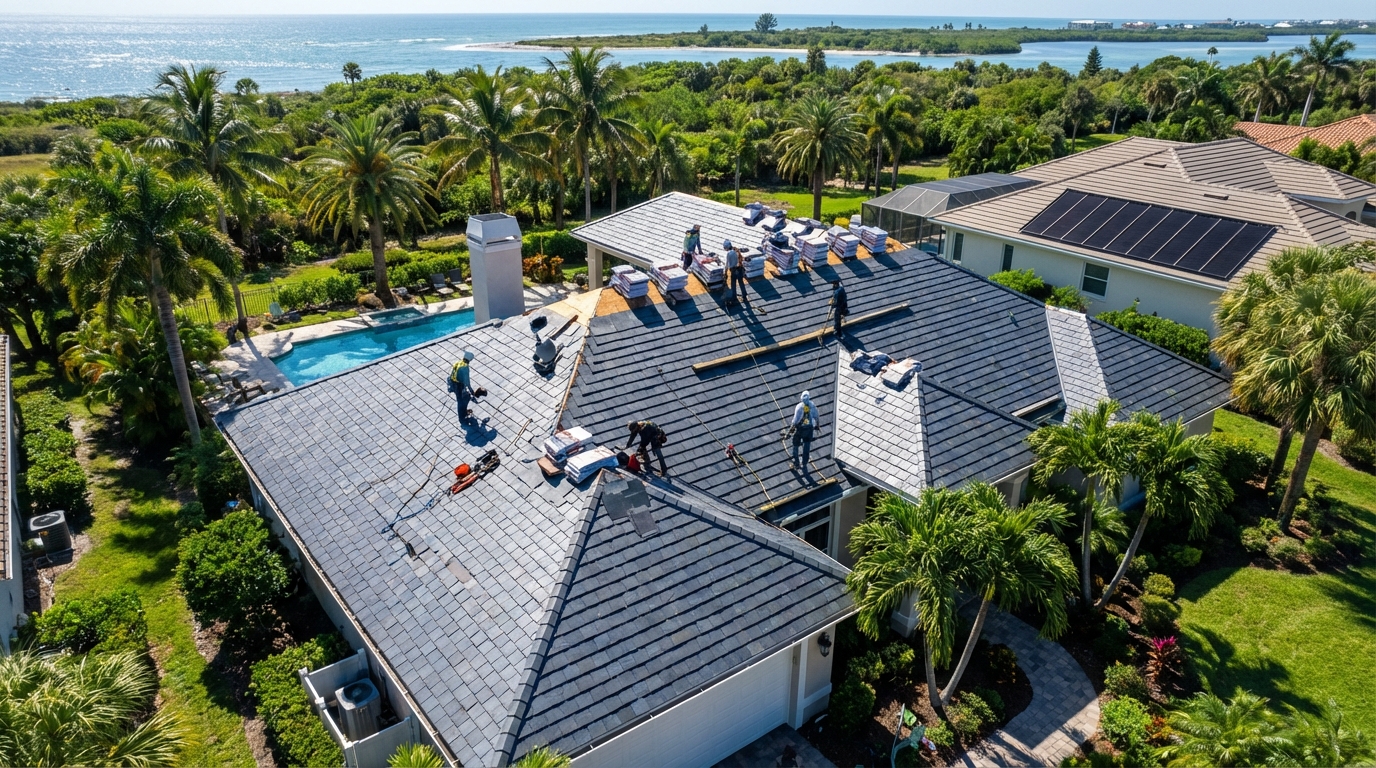
The plain-English answer is that once more than 25% of a roof area or roof section is being repaired, replaced, or recovered within 12 months, code compliance can push the job beyond a simple patch. That is why the rule matters. It is not a rumor passed around by roofers. It is a code-and-permit issue that can change the scope of work, the budget, and the conversation with your contractor.
The other part homeowners miss is that the old shorthand is incomplete. As of April 22, 2026, Florida's effective statewide code is still the 8th Edition (2023), effective December 31, 2023, and the current language includes an exception tied to roofs that were permitted and installed under the current code or one of the two previous versions. So the right answer in Tampa is not “25% always means full replacement.” It is “25% can trigger broader compliance, but the roof's permit history and installation era matter.”
The exception matters because it can keep a large repair conversation from turning automatically into a full replacement conversation. That does not mean every homeowner qualifies, and it does not mean permitting becomes easy. It means the roofer and the building department have to evaluate more than raw damage percentage. A properly permitted roof installed under qualifying code versions may be treated differently from an older roof with unclear history or prior unpermitted work.
This distinction is especially important in Tampa neighborhoods with mixed housing ages. A newer roof in New Tampa may have a clearer permit trail and code lineage than an older roof in Seminole Heights that has been patched in phases over the years. If you are already sorting through storm damage, start with a storm damage roof assessment so the affected area is documented before anyone makes broad promises about what is or is not repairable.
In Tampa, the 25% rule is filtered through the permit process, so verbal opinions do not settle the issue. Roof covering replacement is handled as a permit-driven job with application, fees, and inspections. If a contractor says a repair will stay under the threshold, that claim still has to survive the written scope, the actual measurements, and the inspection path. Once the permit set reflects broader work, the project can move into a different compliance lane.
This is why homeowners should be skeptical of anyone who offers certainty from the driveway. The 25% question is not just a matter of what looks damaged from the ground. It depends on the actual section involved, the condition of surrounding materials, the documented work performed in the last 12 months, and whether the existing system qualifies for the current exception. A roof inspection is the minimum sensible first step because it turns a vague code worry into a measurable scope review.
The three most useful records are prior reroof permits, a current condition report, and a realistic measurement of the affected roof area. Prior permits matter because they help establish whether the roof was installed under the current code or one of the two previous editions. A current inspection matters because hidden failures around valleys, penetrations, and transitions can expand the actual affected area beyond what the stain on the ceiling suggests. Measurement matters because 25% is a threshold question, not a gut-feel question.
The Hillsborough County Property Appraiser is not the permit office, but property records can still help homeowners verify baseline home details while they gather roof documents. If the home changed hands recently, those records can help narrow down timing questions before you start pulling permit data. The goal is not paperwork for its own sake. The goal is to keep your roofer, your permit path, and your budget anchored to facts instead of assumptions.
A repair becomes a stronger replacement candidate when the roof is old, the affected area is broad, permit history is weak, or repeated leaks show the surrounding system is already failing. Even if the code leaves a repair window open, replacement can still be the better engineering and cost decision when the remaining roof is near the end of its service life. That is especially true when homeowners are already planning to sell, refinance, or stay through future storm seasons.
The right question is not “Can I force this to stay a repair?” It is “What scope is safest, defensible, and durable for this Tampa roof right now?” Sometimes that answer is a targeted repair. Sometimes it is a section replacement. Sometimes the cleaner move is a full roof replacement because the roof is too far gone for piecemeal work to make sense.
The safest approach is to treat the 25% rule as a code question first, then use that code context to frame your contractor and insurance conversations. A homeowner should not tell an insurer “the law says I need a whole roof” unless a qualified roofer and the permit path support that conclusion. In the same way, a contractor should not promise “insurance will have to buy a replacement” based only on a rough visual walkaround. Those statements create expectations that may not survive the inspection and permitting process.
The cleaner method is to document the roof condition, define the affected area, and then explain how the code issue could influence scope. That gives the homeowner a defensible narrative whether the project stays in repair territory or shifts toward replacement. It also reduces the risk of two common problems in Tampa: contractors overselling a replacement before the facts are clear, and homeowners underestimating how much documentation they need before they rely on a code-trigger argument.
Outdated content is risky because it turns a conditional code issue into a false certainty. Many homeowners still find older pages that say “more than 25% damage means a mandatory full replacement” with no mention of the current exception language. That kind of summary is attractive because it sounds simple, but it encourages people to plan budgets, claims, and contractor expectations around a rule that is no longer explained completely by that shortcut.
The safer approach is to use current code-aware language and then verify how it applies to the actual roof in Tampa. If a page, salesperson, or adjuster gives you a one-line answer without asking about permit history, roof age, or installation date, they are probably compressing the issue too aggressively. This is exactly the kind of topic where precision matters more than speed.
A good rule of thumb is this: if someone explains the 25% rule without also mentioning permits, installation history, or the current Florida code exception, you are not getting the full picture. That does not make them dishonest, but it does mean you should slow down before you build a claim, budget, or contractor strategy around the advice.
Write down the address, the age of the roof if you know it, and whether any part of the roof has been repaired in the last year. That is enough to make an inspection call productive. The point is not to solve the code issue yourself. The point is to hand a roofer and permit reviewer a cleaner starting picture.
If you want the quickest path to a usable answer, schedule a professional roof inspection or call (813) 324-6822. One documented site visit can tell you whether the job still looks like a repair conversation in Tampa or whether broader replacement planning is the more realistic path.
See realistic Tampa roof replacement ranges by material, home size, and permit-related variables.
Read Answer →Learn how home size, actual roof area, pitch, and material choice affect pricing in Tampa.
Read Answer →Compare timing, weather risk, and demand patterns so you can schedule a smarter Tampa roof replacement.
Read Answer →Explore our main roof replacement page for process, materials, inspections, and service details.
Read Answer →