
Free Inspections · Licensed & Insured
Tampa homeowners often ask when roof prices soften, but the cheapest calendar window is not always the smartest replacement window in a city where weather, permit timing, and storm season all matter.
Late winter and parts of spring are often the most favorable time to replace a roof in Tampa, FL if your goal is to improve scheduling flexibility and potentially catch softer demand. In many cases, homeowners who plan before the busiest storm-driven periods have a better chance of comparing quotes calmly, choosing materials without rush pressure, and booking a contractor on a cleaner schedule.
That said, the cheapest time is not always the best time. If your roof is leaking, wind-damaged, or already near failure, waiting for a theoretical off-season discount can cost more than it saves. In Tampa, Florida, weather risk, permit timing, and urgency often matter more than chasing the absolute lowest number on the calendar.
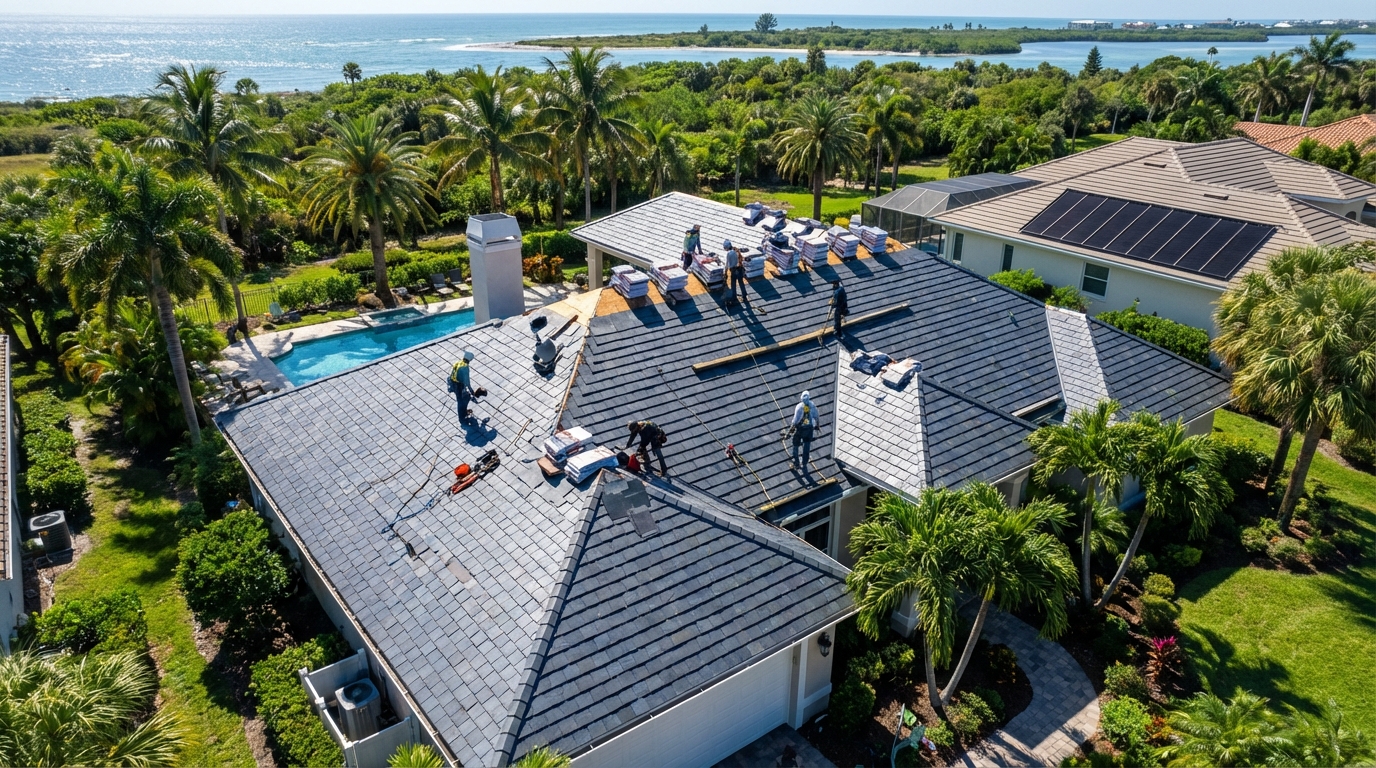
Late winter and parts of spring are often the most favorable planning window in Tampa because demand is usually calmer and homeowners have more room to compare options before peak weather pressure builds. That does not mean every contractor drops prices on a fixed calendar date. It means the market is often less chaotic before summer storms and emergency calls begin to dominate schedules.
In practical terms, that calmer window can save money indirectly. Homeowners can compare quotes without rush pressure, choose materials with fewer supply surprises, and book crews before the calendar gets crowded. Those are real savings, even if the line item does not say “seasonal discount.” For a roof that is aging but still stable, timing the replacement before urgency kicks in is usually smarter than trying to guess the single cheapest week of the year.
Storm season matters because weather risk can erase any theoretical off-season savings. Once summer rain patterns intensify or a tropical system enters the forecast, projects become harder to schedule and harder to execute cleanly. Temporary dry-in steps, rain delays, and surge demand after visible neighborhood damage all push the homeowner out of a calm planning environment and into a reactive one.
This is especially important for older Tampa roofs already showing weakness. Lifted shingles, recurring leaks, failing underlayment, or soft decking are signs that waiting may not be strategic. It may simply be expensive later. If there is active damage now, a roof inspection is more valuable than another round of calendar math. If wind or hail already played a role, review our storm damage roofing guidance so you separate emergency stabilization from planned replacement timing.
Permits matter because Tampa reroofing is not scheduled only around crew availability. Roof replacement in the City of Tampa moves through a permit-based process with application, fees, and inspections, which means the calendar includes municipal steps as well as contractor steps. Homeowners who wait until the roof is failing often discover that they do not just need labor fast. They need coordination fast, and that is harder.
Code issues can also complicate timing. If the roof is old, heavily repaired, or near a broader code-trigger conversation, delaying the decision does not simplify the work. It can increase the chance that the eventual scope is larger, more urgent, and more expensive. If that question is already in the background, compare your situation with our explanation of the 25 rule for roof replacement in Tampa.
Now is the cheapest time when the roof is already leaking, the repair cycle is repeating, or interior damage is starting. At that point, the homeowner is no longer choosing between two calendar windows. They are choosing between planned replacement and increasingly expensive delay. Water intrusion can add drywall repairs, insulation replacement, mold risk, and emergency tarping costs that quickly outweigh any marginal savings from waiting for a softer season.
This is where online timing advice often breaks down. Content that says “wait until winter for the best price” can be directionally useful for a healthy aging roof, but it is poor advice for a Tampa roof with active failure signs. If you want a more grounded budget conversation, pair the timing question with our broader roof replacement cost guide for Tampa so you are weighing both price and risk.
The safest way to decide is to judge roof condition first and calendar strategy second. A roof that is dry, structurally sound, and nearing the end of life may give you room to plan around a better seasonal window. A roof with recurring leaks, visible storm wear, or prior patchwork usually does not. The decision should come from condition evidence, not just general market advice.
Local context matters here too. Homes in coastal-exposed or wind-vulnerable parts of Tampa Bay may carry more downside in waiting through another storm cycle than homes with simpler exposure and newer roof systems. If the goal is to save money, the right move is often to remove uncertainty early rather than gamble on a calendar discount that may never materialize.
Tampa usually behaves more like a fluctuating demand market than a classic winter off-season market. Roofing does not shut down the way it can in colder states, so the better question is when demand becomes calmer, not when work stops. Homeowners often see the smoothest scheduling before the weather-driven rush, then a tighter and more reactive market once visible storm damage starts appearing across neighborhoods.
That shared pattern is more useful than pretending each sub-area has a totally different calendar. South Tampa, Carrollwood, and New Tampa may differ in roof style and housing age, but the broader timing pattern is the same: planned projects are easier to manage before urgency spreads. If your roof is still stable, that is the window to use. If it is already failing, the shared Tampa pattern matters less than your roof condition right now.
The most expensive timing mistake is confusing “not urgent today” with “safe to delay for months”. Homeowners often postpone replacement because the leak is intermittent, the stain is small, or the previous repair seemed to help. In Tampa, that logic is fragile. Humidity, heat, and recurring rain can turn a manageable roof issue into damaged insulation, stained drywall, and hidden decking problems between storms.
Another common mistake is waiting until the neighborhood is visibly busy with storm work before getting on a roofer's calendar. Once that happens, you are competing with emergency jobs, not shopping from a position of leverage. The roof may still get replaced well, but the process is usually more stressful and less flexible. Timing savings rarely come from bravado. They come from acting before the roof forces your hand.
If the roof is old but still dry, the smartest plan is usually to inspect early, compare bids before demand spikes, and schedule before storm exposure becomes the dominant variable. That approach gives you time to choose materials, review permit scope, and avoid emergency decision-making. It also keeps you out of the trap where one bad weather week turns a planned capital expense into a time-sensitive problem.
This is the scenario where seasonal strategy actually helps. You are not trying to beat the market by a few dollars. You are trying to buy under calmer conditions. For most Tampa homeowners, that means replacing with enough lead time to avoid peak storm anxiety rather than chasing a mythical bargain month.
A roof inspection can also reveal whether the home shares the broader Tampa pattern or has a detail that changes the timing recommendation. For example, a roof with vulnerable low-slope tie-ins, older flashing, or a history of patching after heavy rain may have less safe waiting room than a similar-aged roof with a cleaner assembly. That is why timing advice should always come from roof condition plus calendar context, not calendar context alone.
Calm buying conditions matter because they improve decision quality across the whole job. When you are not under leak pressure, you can compare contractors more carefully, ask better questions about scope, and choose materials without rushing. That often creates more financial value than shaving a small percentage off labor during a theoretically softer month.
Homeowners sometimes imagine savings only as the final invoice number, but timing also affects mistake risk. A rushed project is more likely to involve thin quote comparisons, weaker documentation, and poorer contractor fit. In Tampa, avoiding that rushed environment is often the real version of “buying at the right time.”
Take one minute to note whether the roof has leaked in the last year, whether shingles are lifting, and whether any repairs have already been attempted. Those three facts tell a roofer far more than “I was hoping to wait until spring.” They help separate a planning conversation from an urgency conversation immediately.
Then schedule a professional inspection. That single action takes less than a minute and gives you a Tampa-specific answer on whether waiting is a negotiation strategy or a financial risk.
See realistic Tampa roof replacement ranges by material, home size, and permit-related variables.
Read Answer →Get a plain-English explanation of Florida's 25% roof rule and what recent code updates mean.
Read Answer →Learn how home size, actual roof area, pitch, and material choice affect pricing in Tampa.
Read Answer →Explore our main roof replacement page for process, materials, inspections, and service details.
Read Answer →